This article applies to CUT&Tag, CUT&RUN, meCUT&RUN and Multiomic CUT&RUN.
Deciding whether to clean up your cell or nuclei sample for a CUTANATM workflow requires you to balance the need for adequate sample input versus the potential detrimental effects of debris on the genomic assay. The debris present in your sample may have different impacts on the assay depending on its source, and not all debris will negatively impact your CUT&RUN or CUT&Tag assay. With that being said, if you are experiencing high levels of debris from a cell-culture-derived sample, it is likely worth optimizing your cell culture, dissociation and nuclei isolation protocols prior to proceeding to your CUTANA assay.
If you are working with frozen tissue and your nuclei do not look intact after tissue dissociation, there could be a problem with your tissue snap-freezing protocol. To maximize the likelihood that you are able to recover intact nuclei from your frozen tissue, we recommend the following snap-freezing protocol:
Ensure that your tissue sample is composed of pieces less than 1cm3 in size.
Place the specimen in a tube and drop in liquid nitrogen for 30-60 seconds.
Remove the sample from liquid nitrogen and store at -80℃.
When dissociating frozen tissue samples, different debris can be generated based on the tissue type that you are working with. Higher levels of debris will generally increase the noise in your sequenced data, but this can also be exacerbated or mitigated by the strength of the antibody target that you are using for genomic mapping. Additionally, it’s important to weigh the benefits of any additional clean up methods against the likely chance that they will decrease your overall nuclei yield.
CUT&RUN compatible clean-up methods:
Extra washing with PBS and additional centrifugation and resuspension
Extra filtration with a 70µm filter
Performing a density gradient centrifugation with sucrose or Opti-Prep
Using anti-nucleus microbeads and MACS sorting
For a comparison between these methods and their suitability for your sample, see Figure 2 below.
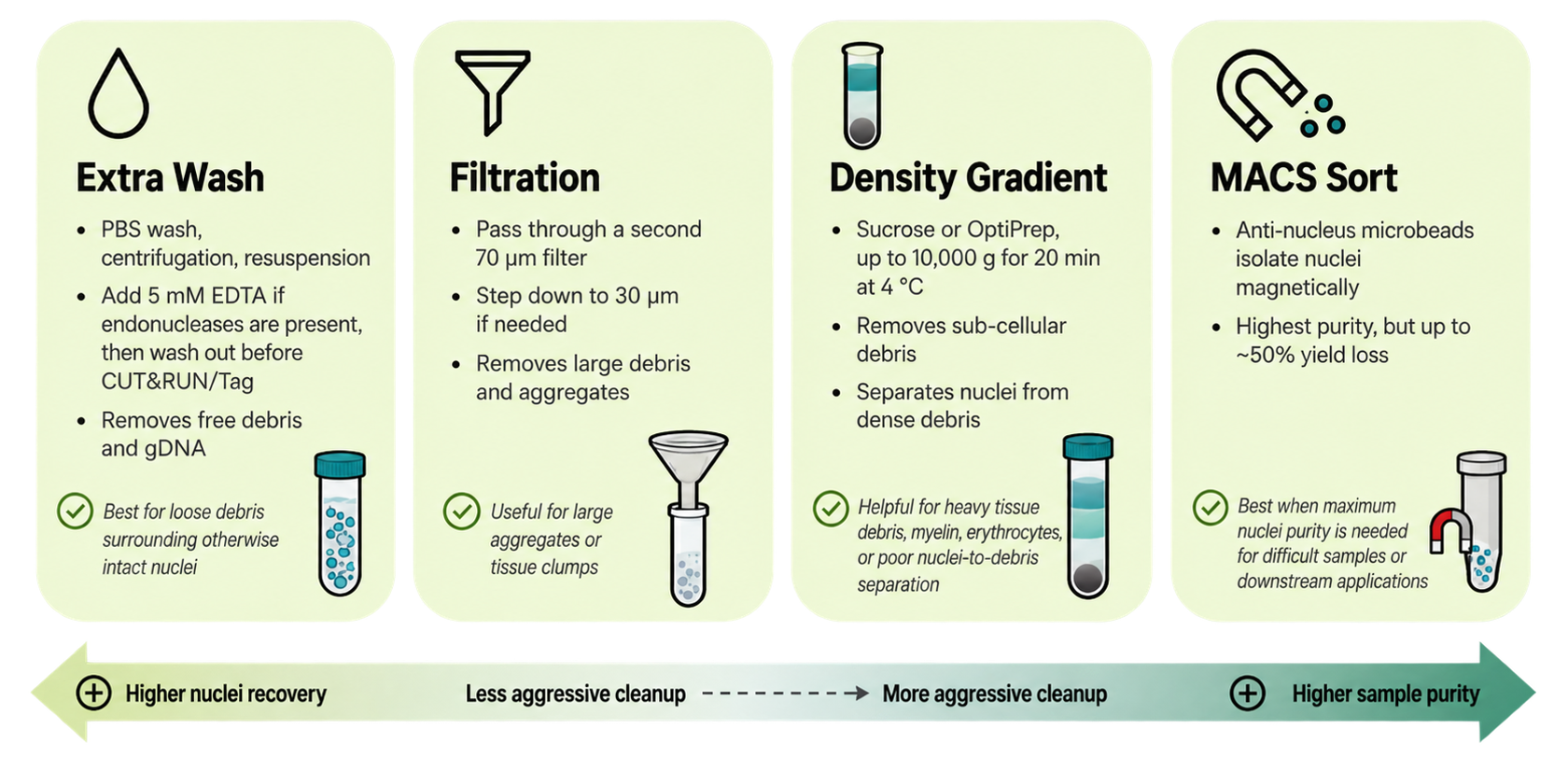
Figure 2. Cleanup options and factors to consider when selecting the appropriate cleanup strategy for your sample.